Wristwatch Outline Icon: A Practical Evaluation for Digital and Print Projects
In the realm of digital design and content creation, the choice of visual assets is a critical decision that impacts user experience, brand perception, and project efficiency. Among the myriad of available resources, the Wristwatch Outline Icon represents a specific tool with defined capabilities. This article provides a balanced evaluation of this icon pack, helping you determine if it aligns with your project's requirements. It is not merely a description of the asset, but a guide for your decision-making process.
Understanding the Asset: What It Is and What It Includes
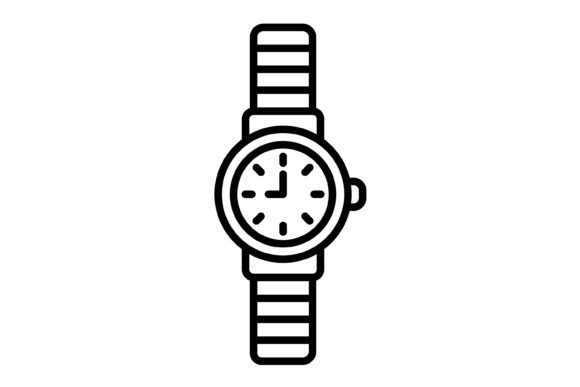
A Wristwatch Outline Icon is a minimalist graphic representation of a wristwatch, typically using clean lines to define its form without filled colors or complex shading. The asset in question is not a single file but a comprehensive package designed for versatility. Upon download, you receive a ZIP file containing the icon in five fundamental file formats: AI, EPS, JPG, PNG, and SVG. Each format serves a distinct purpose in the design and development workflow.
- AI and EPS: These are vector formats, ideal for professional graphic editing in software like Adobe Illustrator. They allow for infinite scaling without loss of quality and easy modification of paths and strokes.
- JPG: A standard raster format suitable for use in documents, presentations, or contexts where a simple image file is needed and transparency is not required.
- PNG (Transparent Background): This raster format is crucial for web and app design. The transparent background allows the icon to be placed seamlessly over any color or image.
- SVG (Scalable Vector Graphics): The preferred format for modern web and mobile interfaces. SVGs are lightweight, scalable, and can be manipulated with CSS, making them perfect for responsive websites and applications.
The package is marketed as containing 100 vector icons, suggesting a collection of variations around the wristwatch theme. A key feature highlighted is its design for "maximum usability" across all devices and platforms, indicating attention to pixel-perfection at common sizes and compatibility with various operating systems.
Evaluating the Benefits: Why Consider This Icon Pack?
The primary benefits of this icon set stem from its structure and intended use cases. For designers and developers, the inclusion of multiple formats in a single package is a significant efficiency gain. It eliminates the need to source or convert files for different stages of a project, from initial illustration (AI/EPS) to final implementation (SVG/PNG).
The promise of being "ready to use for all devices and platforms" addresses a common pain point. Icons that look crisp on a desktop may appear blurry on high-density mobile screens. A well-crafted icon set will have been tested for clarity at various resolutions, which can save considerable time on adjustments. Furthermore, the availability of editable vector files (AI, EPS, SVG) offers a high degree of customization. You can adjust line weight, color, or even modify the icon's shape to better fit your brand's visual language, a trade-off that is not possible with locked raster images.
Key Considerations and Potential Tradeoffs
While the features are promising, a practical evaluation requires considering potential limitations. The most significant is the lack of a visual preview in the description. Without seeing the actual icon designs, you cannot assess their aesthetic quality, style consistency, or whether they match your project's tone. Are they overly generic or do they have a unique character? This is a critical unknown.
Another consideration is the scope of the collection. The description emphasizes a "wristwatch outline icon," but mentions 100 icons. It is essential to clarify what these 100 variations entail. Are they different angles, perspectives, or complementary icons (like a clock face, stopwatch, or calendar)? If your project requires a broad set of time-related icons, this could be a strength. If you only need one specific watch icon, the value proposition changes.
Finally, the term "easy to edit" is relative. While vector files are inherently editable, the complexity of the paths and the organization of layers within the AI or EPS file can vary. A poorly structured file, even in a vector format, can be time-consuming to modify.
Identifying the Ideal Use Case: When Is This a Strong Fit?
This icon pack is likely a strong fit for projects that prioritize consistency and workflow efficiency. If you are developing a mobile application, a responsive website, or a suite of marketing materials, having a single source of truth for your icons in all necessary formats can streamline the production process. It is particularly valuable for:
- UI/UX Design: The SVG and PNG formats are directly usable in prototyping tools and final development.
- Print and Presentation: The AI, EPS, and high-resolution JPG formats ensure quality in physical materials and slides.
- Template Creation: The ability to edit and scale the icons makes them ideal components for design templates sold or distributed to others.
The icon is a strong candidate if your goal is to implement a clean, modern, and consistent line icon style across multiple mediums without starting from scratch.
Considering Alternatives: When to Look Elsewhere
Alternatives should be considered in several scenarios. If your project demands a highly specific or unique visual style that a generic outline icon cannot fulfill, commissioning custom illustrations or exploring more stylistically diverse icon libraries would be more appropriate. Similarly, if you only need a single icon for a one-time use, investing in a full pack may not be cost-effective; many repositories offer individual icons for purchase.
If your workflow is exclusively based on raster graphics (e.g., in Canva or basic photo editors) and you have no need for vector editing, the core value of the AI and EPS files is diminished. You might find a simpler PNG-only pack sufficient. Furthermore, if the icon's style does not resonate with your brand identity after viewing a preview, no amount of technical utility can compensate for a poor aesthetic fit.
Practical Decision-Making Insights
To make an informed decision, follow these practical steps:
- Seek a Preview: Before committing, try to find a visual sample of the icon pack. Assess the line quality, balance, and overall design language.
- Clarify the Contents: Investigate what the "100 vector icons" specifically include. A product page or a detailed file listing is essential to understand the scope.
- Assess Your Technical Needs: Match the provided formats to your project's technical stack. If you work primarily with SVG for web development, confirm the SVG files are optimized for the web.
- Test Editability: If possible, examine the structure of a sample vector file. Clean, well-organized layers and paths are a sign of a professional asset.
- Evaluate Against Your Style Guide: Determine if the icon's minimalist outline style aligns with or can be adapted to your existing brand guidelines.
In conclusion, the Wristwatch Outline Icon pack presents itself as a versatile toolkit for multi-platform design. Its value lies in its format diversity and scalability, offering practical benefits for efficiency-focused teams. However, the decision to use it should hinge on a clear understanding of its visual style and the specific contents of the package, balanced against the unique demands and aesthetic goals of your project. By methodically evaluating these factors, you can determine whether this asset is a practical tool for your needs or if an alternative approach would better serve your objectives.