Gas Cylinder Blue Orange Line Icon: The Definitive Resource for Modern Digital Design
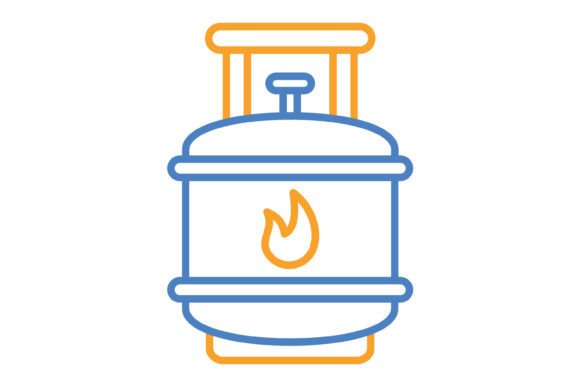
In the contemporary digital landscape, the visual language of an interface is no longer merely decorative; it is a critical component of user experience and brand communication. The Gas Cylinder Blue Orange Line Icon represents a sophisticated convergence of aesthetic clarity and functional utility, designed specifically for the discerning needs of professionals, creators, and entrepreneurs. As digital products become increasingly complex, the demand for precise, scalable, and semantically rich graphical assets has skyrocketed. This particular icon set addresses these evolving expectations by offering a specialized visual representation of gas cylinders, utilizing a striking blue and orange color palette to ensure immediate recognition and emotional engagement.
The significance of this asset extends beyond its visual appeal. It serves as a bridge between complex industrial concepts and user-friendly digital interfaces. Whether utilized in a mobile application for industrial monitoring, a presentation for energy sector stakeholders, or a marketing template for safety compliance, the Gas Cylinder Blue Orange Line Icon provides a consistent and professional visual anchor. The deliberate choice of a line art style ensures that the icon remains legible across various screen densities and resolutions, a crucial consideration in our multi-device world. Furthermore, the inclusion of specific file formats—AI, EPS, JPG, PNG with transparency, and SVG—demonstrates a forward-thinking approach to asset management, catering to the diverse workflows of designers, developers, and content creators.
Understanding the Visual Language: Design Principles and Color Psychology
The design of the Gas Cylinder Blue Orange Line Icon is rooted in established principles of visual communication. The line art approach, characterized by clean strokes and minimal fill, prioritizes clarity and reduces visual clutter. This style is particularly effective in environments where icons must coexist with dense information, such as dashboards, data visualizations, or technical manuals. The line weight is calibrated to maintain integrity at small scales, ensuring that the icon remains identifiable when used in mobile app toolbars or as part of a complex infographic.
Color plays a pivotal role in the icon's effectiveness. The combination of blue and orange is not arbitrary; it leverages color psychology to convey specific meanings. Blue is universally associated with trust, stability, and professionalism, making it an ideal choice for industries where reliability is paramount, such as energy, manufacturing, and safety. Orange, on the other hand, introduces elements of energy, urgency, and visibility. It is often used to draw attention to important elements or to signify caution. In the context of a gas cylinder icon, this dual-color scheme can serve multiple functions: the blue may represent the cylinder itself, symbolizing its robust and dependable nature, while orange accents could indicate operational status, warning labels, or interactive elements. This thoughtful application of color enhances the icon's utility as a communication tool, allowing it to convey nuanced information at a glance.
The Ecosystem of Modern Iconography: File Formats and Technical Versatility
A critical aspect of any professional icon set is its technical adaptability. The Gas Cylinder Blue Orange Line Icon is delivered in a comprehensive package that includes five distinct file formats, each serving a specific purpose within the design and development lifecycle. This multi-format approach reflects an understanding of the fragmented yet interconnected nature of modern creative workflows.
- AI (Adobe Illustrator): The native vector format for Adobe Illustrator, this file is the cornerstone for designers who require full editability. It allows for the manipulation of every anchor point, color swatch, and layer, enabling complete customization to fit brand guidelines or specific design requirements.
- EPS (Encapsulated PostScript): A legacy vector format that maintains broad compatibility across various graphic design software, including older versions of CorelDRAW and Adobe Illustrator. It ensures that the icon can be integrated into print workflows and high-resolution outputs without loss of quality.
- SVG (Scalable Vector Graphics): The preferred format for web and digital applications. SVGs are resolution-independent, meaning they scale perfectly on any screen, from a smartwatch to a 4K monitor, without pixelation. They are also lightweight and can be manipulated with CSS and JavaScript, making them ideal for responsive web design and interactive applications.
- PNG (Portable Network Graphics): The inclusion of PNG files with a transparent background is essential for practical implementation. This format is widely supported across all platforms and is particularly useful for presentations, documents, and situations where vector editing software is not available. The transparency ensures seamless integration over any background color or texture.
- JPG (Joint Photographic Experts Group): While not ideal for sharp line art due to its lossy compression, the JPG format is included for maximum compatibility in contexts where file size is a concern or when the icon is used as part of a larger photographic composition. It ensures the asset can be utilized in virtually any software environment.
This collection of formats ensures that the Gas Cylinder Blue Orange Line Icon is not a static asset but a versatile tool that can be adapted to the specific technical demands of any project, from a high-fidelity prototype in Figma to a printed safety manual.
Practical Applications: From Industrial Dashboards to Marketing Collateral
The utility of a well-designed icon is measured by its application. The Gas Cylinder Blue Orange Line Icon finds relevance across a spectrum of professional and creative domains, driven by the need for clear, intuitive visual communication.
In Mobile and Web Applications: For developers building applications for the energy sector, logistics, or industrial IoT, this icon can serve as a primary navigation element. It can represent inventory management for gas supplies, monitor pressure levels in real-time dashboards, or indicate the location of storage facilities on a map interface. Its clean line art ensures it integrates smoothly into minimalist UI designs, while the blue and orange accents can be used to convey status—e.g., blue for "idle" and orange for "in use" or "alert."
In Presentations and Corporate Communication: Professionals in the energy, chemical, or manufacturing sectors frequently need to communicate complex information to stakeholders. The Gas Cylinder Blue Orange Line Icon can be used in slide decks to visually reinforce points about supply chain logistics, safety protocols, or product specifications. Its professional aesthetic enhances the credibility of the presentation, while its symbolic clarity aids in audience comprehension.
In Print and Digital Templates: Freelancers and marketing agencies can leverage this icon set to create branded materials for clients in relevant industries. It can be incorporated into safety posters, instructional brochures, website headers, or social media graphics. The availability of high-resolution vector files ensures that the icon maintains its sharpness across all print media, from business cards to large-format banners.
In Illustration and Educational Content: The icon can also be a foundational element in more complex illustrations or infographics. Educators creating materials about energy resources, industrial processes, or safety procedures can use the icon to create engaging visual aids that simplify complex topics for learners.
Aligning with Industry Trends: The Shift Toward Systematic and Accessible Design
The development and distribution of the Gas Cylinder Blue Orange Line Icon align with several key trends shaping the design and technology industries. The move towards design systems—comprehensive libraries of reusable components and guidelines—has made assets like this invaluable. A consistent, well-designed icon set contributes to the visual coherence of a product or brand, reducing cognitive load for users and streamlining the design process for teams.
Moreover, the emphasis on scalability and multiple file formats speaks to the growing importance of accessibility and cross-platform consistency. In an era where a single product must perform flawlessly on a desktop browser, a mobile app, and a printed manual, assets must be inherently flexible. The SVG and PNG formats, in particular, support responsive design principles, ensuring that visual elements adapt gracefully to different screen sizes and contexts.
The market is also seeing a heightened focus on visual semiotics—the study of signs and symbols. As digital interfaces become more global, the need for universally recognizable icons increases. A gas cylinder, while a specific object, can be rendered in a way that transcends language barriers, provided the design is clear and intuitive. The Gas Cylinder Blue Orange Line Icon, with its clean lines and deliberate color coding, is designed to meet this need for unambiguous visual communication.
Conclusion: A Strategic Asset for the Modern Creator
Ultimately, the Gas Cylinder Blue Orange Line Icon is more than a simple graphic; it is a strategic asset designed for the multifaceted demands of modern professional workflows. Its value lies in the intersection of thoughtful design, technical versatility, and contextual relevance. For the entrepreneur building a niche SaaS product, the marketer crafting a campaign for an industrial client, or the designer assembling a comprehensive UI kit, this icon provides a reliable and polished solution. It embodies the principle that effective design is not just about looking good, but about communicating clearly, functioning flawlessly, and adapting seamlessly to the ever-evolving digital ecosystem. By integrating such purpose-built assets, professionals can elevate the quality of their work, enhance user understanding, and ultimately drive greater engagement and success in their respective fields.